
Sappho's Ode to Aphrodite
A translation of an ancient poem, with a rationale and transliteration.

Spectacular throned, immortal Aphrodite
mischievous Child of Zeus, I beg you
queen of love, break not my
	heart with pain

but come here, if ever before
you heard my distant voice
and felt my love, left your father’s
	golden house and came

yoked your chariot. Birds with pretty wings,
quick sparrows brought you to the
black earth, down from the sky
	through midair—

and soon arrived. And you, blessed one,
a gentle smile upon your deathless face
asked what has happened to me this time,
	why am I calling out this time

and what crazy wish now has my heart.
“Who should I entice this time to find
her way into your arms? Who torments
	you now, Psappho?

I bet if she flees, she’ll soon pursue.
If she refuses gifts, she’ll soon be giving too.
If she does not love you, soon she will
	even if she wasn’t looking to.”

Come to me now. Free me from my
crushing wants, all I wish for,
make it happen, and in battle,
	you be my ally.
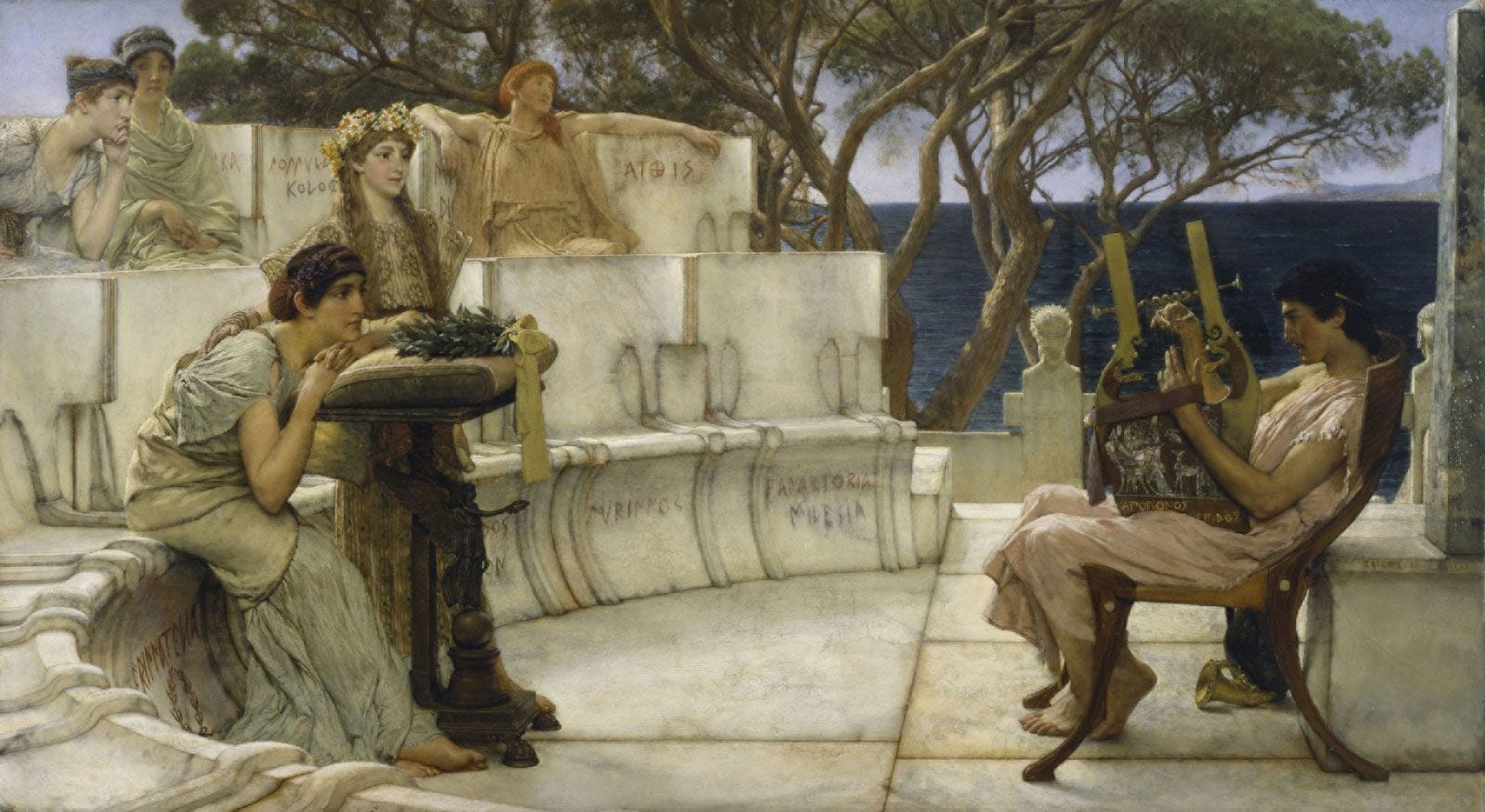
This was my attempt at a translation of Sappho's "Ode to Aphrodite", one of the only poems (songs) she wrote that survives in full. It follows the form of a Homeric hymn, but subverts the audience's expectations by including personal hopes and sentiments. Rather than merely praising Aphrodite, as was the convention, the poem recounts Sappho's request that Aphrodite cause some unnamed woman to love her, and then Aphrodite's exasperated reply that basically amounts to, "but you will love someone else next week".

I made this translation for a YouTube video essay called: "Sappho - The First Sensitive Person". Here's a clip from the video with the recitation of the poem:
I do not know any Greek. My methodology was to use the Anne Carson, Constantine A. Trypanis, David A. Campbell, and other translations as a baseline / reference and to carefully re-read and study the meaning of the poem to change and adjust a few things. I am sure that the end result is not very scholarly or professional, but there are a few choices that I stand behind. Here is the rationale:

The first line, "Poikilothrov athanat Aphrhodita" is often translated with a different word order to suit English grammar. "Poikilothrov" (elaborate-throned) is given many different translations because it is a specific concept for which English has no obvious single word. I chose "Spectacular throned, immortal Aphrodite" to preserve the word order and the "p" sound at the beginning of the first word, which I thought set the tone for the drumming, simple sound of the poem.

The next phrase "pai Dios doloploke" is often rendered as something like "wile weaving daughter of Zeus" or "daughter of Zeus, twister of lures".  I went with Anne Carson's "child of Zeus", since it sounds closer to "pai Dios", but I chose the word "mischievous" instead of "wile weaver" because I think it is mostly lost on the modern person what "wile weaver" means. Especially on an emotional level.

The second half of the poem contains Aphrodite's response to Sappho's initial request. In the fourth and fifth stanzas, this response features a repetitive phrase that Anne Carson renders as "now again", three different times. I went with David Campbell's "this time... this time... this time...", because I felt that it more readily conveyed Aphrodite's exasperation with Sappho's presumably numerous requests.

The second last stanza perplexed me at first. Here is Carson's rendition of it:

For if she flees, soon she will pursue.
If she refuses gifts, rather will she give them.
If she does not love, soon she will love,
       even unwilling.

The very last line made me wonder if the poem was trying to say that Sappho or Aphrodite was going to coerce or force the beloved in scrutiny to love. Especially given Campbell's rendition, "soon she shall love even against her will". However, I ultimately interpreted the poem not to be referring to coercion, but rather the idea that falling in love often happens without us expecting it or planning for it. So I chose "even if she wasn't looking to". This also rhymes with previous lines, which I liked because this stanza seems to rhyme in the original Greek as well.

Amateur though it was, my Frankenstein translation of this poem was quite fun and it brought me closer to the meaning of the text. Sappho in particular has been translated many, many times, and I encourage you to look at other renditions of this very beautiful and playful poem. It seems to be one of the best poems in the whole of Ancient Greek literature. That we know of. If only we still had more of her complete poetry...

       Greek Transliteration
ποικιλόθρον’ ἀθανάτ’ Ἀφρόδιτα,
Poikilothrov athanat Aphrhodita
παῖ Δίος δολόπλοκε, λίσσομαί σε,
pai Dios doloploke, lissomai se,
μή μ’ ἄσαισι μηδ’ ὀνίαισι δάμνα,
mn m asaisi mnd oniaisi damna,
       πότνια, θῦμον,
       potnia, Thumon,

ἀλλὰ τυίδ’ ἔλθ’, αἴ ποτα κἀτέρωτα
alla tyid elth, ai pota katerota
τὰς ἔμας αὔδας ἀίοισα πήλοι
tas emas audas aioisa pnloi
ἔκλυες, πάτρος δὲ δόμον λίποισα
eklyes, patros de domov lipoisa
       χρύσιον ἦλθες
       chrusion thlthes

ἄρμ’ ὐπασδεύξαισα· κάλοι δέ σ’ ἆγον
arm upasdeusaisa kaloi de s agon
ὤκεες στροῦθοι περὶ γᾶς μελαίνας
Okees strouthoi peri gas melainas
πύκνα δίννεντες πτέρ’ ἀπ’ ὠράνωἴθε-
pukna dinnentes pter ap oranoithe
       ρος διὰ μέσσω·
       ros dia messo

αἶψα δ’ ἐξίκοντο· σὺ δ’, ὦ μάκαιρα,
aispa d exikonto su d, o makaira
μειδιαίσαισ’ ἀθανάτῳ προσώπῳ
meidiaisais athanato prosopo
ἤρε’ ὄττι δηὖτε πέπονθα κὤττι
ere otti deute pepontha kotti
        δηὖτε κάλημμι
        deute kalemmi

κὤττι μοι μάλιστα θέλω γένεσθαι
kotti moi malista thelo genesthai
μαινόλᾳ θύμῳ· τίνα δηὖτε πείθω
mainola thumo tina duete peitho
ἄψ σ’ ἄγην ἐς ϝὰν φιλότατα; τίς σ’, ὦ
aps s agen es wan philotata; tis s, o
       Ψάπφ’, ἀδικήει;
       Psapph, adikeei;

καὶ γὰρ αἰ φεύγει, ταχέως διώξει,
kai gar ai pheugei, tacheos dioxei,
αἰ δὲ δῶρα μὴ δέκετ’, ἀλλὰ δώσει,
ai de dera me deket, alla dosei,
αἰ δὲ μὴ φίλει, ταχέως φιλήσει
ai de me philei, tacheos philesei
       κωὐκ ἐθέλοισα.
       kouk etheloisa.

ἔλθε μοι καὶ νῦν, χαλέπαν δὲ λῦσον
elthe moi kai nun, chalepan de luson
ἐκ μερίμναν, ὄσσα δέ μοι τέλεσσαι
ek merimnan, ossa de moi telessai
θῦμος ἰμέρρει, τέλεσον, σὺ δ’ αὔτα
thumos imerrei, teleson, su d auta
       σύμμαχος ἔσσο.
       summachos esso.
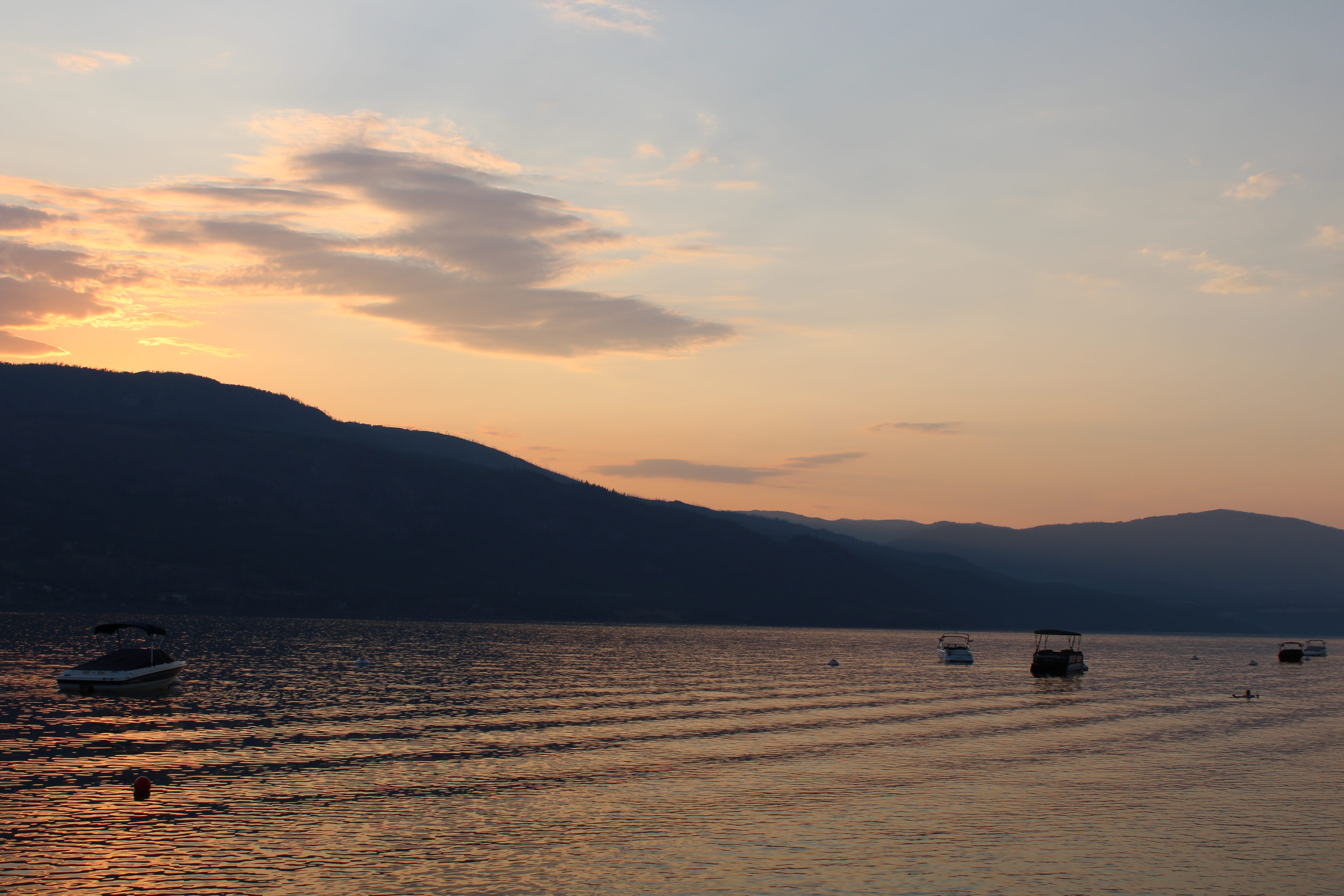
Most of the imagery for the video was captured at Okanagan Lake in British Columbia.